Are you drawn to the clean lines, glass walls, and indoor-outdoor flow that make Palm Springs homes so memorable? If you are thinking about buying or selling here, it helps to understand why midcentury and modern design feel so natural in this city, and what that means in real life. From iconic architectural details to neighborhood patterns and preservation rules, this guide will help you make more informed decisions. Let’s dive in.
Why Palm Springs and Modern Design Fit
Palm Springs is widely known for Mid-Century Modern architecture, and that reputation is not just marketing language. City planning materials tie the city’s identity to architecture that responds to the desert environment, which helps explain why this design style feels so rooted here.
After World War II, Mid-Century Modern became the predominant style in Palm Springs. Local architects adapted it to the climate, new building methods, and the need for efficient homes, creating a version of modernism that feels distinctly tied to the desert rather than copied from somewhere else.
That local story matters if you are shopping for a home or preparing one for sale. In Palm Springs, architectural style is often part of the lifestyle appeal, the neighborhood character, and the property’s long-term value in the eyes of buyers.
What Defines the Look
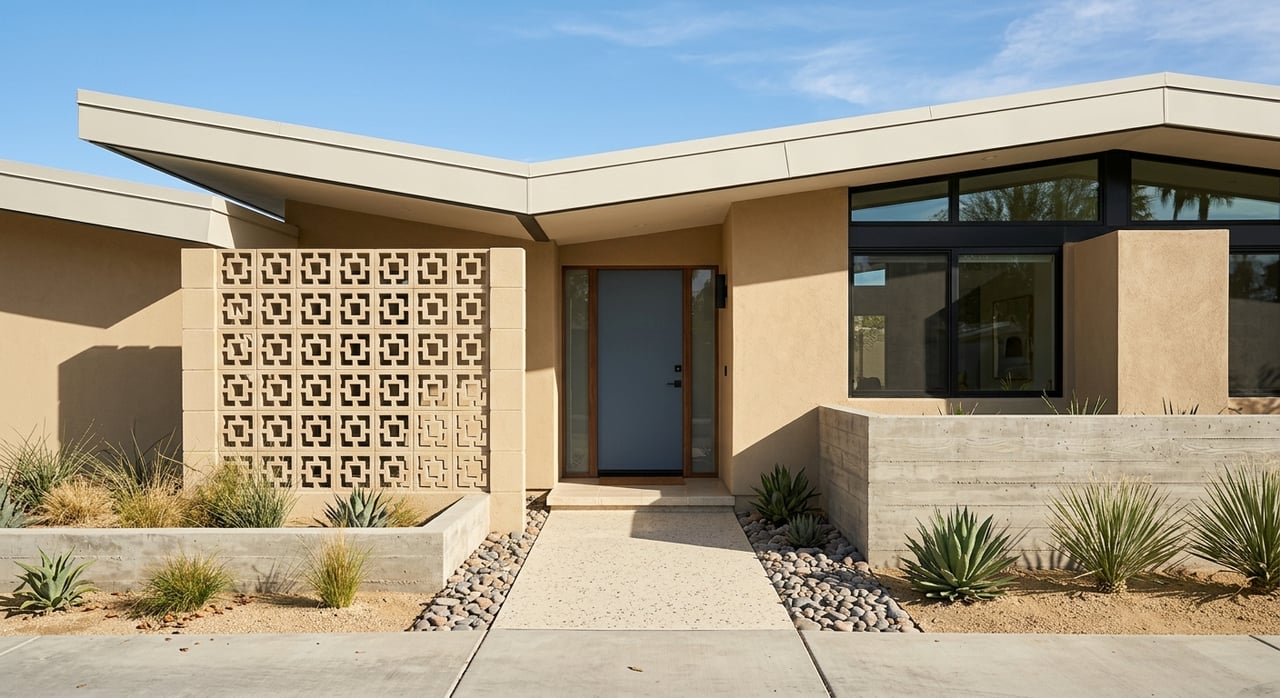
Palm Springs midcentury homes are usually easy to spot once you know what to look for. The city’s historic context statement points to several signature features that still shape the market today.
Key midcentury features
- Post-and-beam construction
- Flat or low-pitched roofs
- Wide overhanging eaves
- Simple geometric forms
- Large expanses of glass
- Clerestory windows
- Sliding doors
- Concrete block or decorative screen walls
- Minimal exterior ornamentation
These features were not only about style. They also helped homes respond to sun, shade, airflow, and the desire to connect indoor spaces with patios, pools, and mountain views.
In desert versions of the style, concrete block and perforated concrete were used to help shield interiors from intense sun while still allowing airflow. That practical side of design is one reason Palm Springs modernism still feels relevant.
How Modern Living Continues Today
Modern living in Palm Springs is not limited to original midcentury homes. Contemporary desert architecture often carries the same ideas forward in updated ways.
Planning guidance for Desert Palisades, one of the clearest official examples of newer design-forward residential development in Palm Springs, emphasizes large panes of glass, patios and terraces, flat or low-sloped roofs, shade structures, natural materials, and site-responsive massing. In simple terms, today’s modern homes often continue the same core principles: clean design, strong indoor-outdoor flow, and a close relationship to the desert setting.
If you love the style but want newer systems or a more contemporary layout, this matters. You may not need to choose between historic charm and modern function, because Palm Springs offers both original architecture and newer homes inspired by the same desert-modern values.
Where You’ll See It Most
Palm Springs has 52 organized neighborhood organizations, and many areas are especially associated with strong architectural identity. The city’s neighborhood resources and related public materials repeatedly highlight several neighborhoods that buyers often recognize for history, design interest, or both.
Notable Palm Springs neighborhoods
- Vista Las Palmas
- Racquet Club Estates
- Racquet Club South
- The Movie Colony
- Movie Colony East
- Historic Tennis Club
- Deepwell Estates
- Indian Canyons
- Tahquitz River Estates
- Twin Palms
- Sunmor Estates
- Sunrise Park
- Royal Hawaiian Estates
- Ocotillo Lodge area
- Tahquitz Creek
Each neighborhood has its own mix of home styles, lot patterns, and atmosphere. Some are closely tied to classic postwar modernism, while others reflect a broader blend of architectural periods and desert living preferences.
If you are searching for a newer take on Palm Springs design, Desert Palisades stands out as an official example of a community shaped around contemporary desert-modern planning principles. That gives buyers another path if they want striking design with a more current construction timeline.
What Buyers Should Check First
Style is exciting, but the practical side matters just as much. In Palm Springs, one of the first things to verify is whether a property is historic, potentially eligible for historic status, or located within a designated historic district.
The city advises buyers and sellers to confirm this before buying, selling, altering, or demolishing a property. Palm Springs uses four property classes, and buildings constructed before January 1, 1978 can fall into Class 4 if they are not otherwise designated.
Why historic status matters
If a property is on a historic site or structure, or located within a historic district, exterior changes may trigger additional review. Alteration, demolition, and new construction on historic sites and structures in historic districts must be reviewed by the Historic Preservation Officer and, for many projects, the Historic Site Preservation Board before permits are issued.
Inside historic districts, design standards apply to both contributing and non-contributing sites. That means even if a home is not the district’s standout architectural example, exterior work may still involve an added review step.
For some contributing sites, there may also be potential for Mills Act property tax relief. However, eligibility is limited, and the contract typically requires a 10-year preservation commitment.
Why Climate Should Shape Your Search
Palm Springs design has always been connected to climate, and that remains true today. NOAA climate normals for Palm Springs Regional Airport show average highs of 108.6 degrees in July and 108.1 degrees in August, with annual precipitation of 4.61 inches.
In a climate like that, a beautiful design is only part of the equation. When you evaluate a midcentury or contemporary desert home, it is wise to pay close attention to the roof, shading, glazing, HVAC performance, insulation, pool systems, and exterior materials.
These details can shape comfort, maintenance needs, and day-to-day livability. They also matter to sellers, because buyers often look closely at how a stylish home has been updated to perform well in desert conditions.
Remodeling With Context in Mind
Many Palm Springs buyers love the idea of updating a home, but the best results usually respect the setting. The city’s Community Design Element says new structures should reflect the city’s diversity and creativity while remaining compatible in scale and character with existing buildings and surroundings.
That helps explain why thoughtful remodels tend to resonate here. Buyers are often drawn to homes that feel fresh and functional without losing the architectural language that makes Palm Springs special.
If you are selling, this can be useful guidance too. Clean presentation, practical improvements, and updates that fit the home’s original character can help your property feel more compelling to style-conscious buyers.
What This Means for Buyers and Sellers
For buyers, Palm Springs offers more than a design trend. It offers a chance to own a home shaped by climate, architecture, and lifestyle in a way that is hard to duplicate elsewhere.
For sellers, understanding that story can help you position your home more effectively. Architectural details, neighborhood context, and preservation status can all influence how buyers see value.
Whether you are looking for an original midcentury property, a contemporary desert-modern home, or guidance on how to prepare a design-forward property for the market, local insight makes a difference. In a market where style and setting are closely connected, informed advice can help you move with more clarity and confidence.
If you are exploring Palm Springs architecture, buying a second home, or preparing to sell in the desert, Kelly Ramsay offers responsive, hands-on guidance backed by deep Coachella Valley knowledge.
FAQs
What makes Palm Springs Mid-Century Modern homes unique?
- Palm Springs Mid-Century Modern homes are known for features like flat or low-pitched roofs, wide eaves, large glass walls, clerestory windows, simple geometric forms, and indoor-outdoor design that responds to the desert climate.
Which Palm Springs neighborhoods are known for modern architecture?
- Public city materials and related local sources often highlight neighborhoods such as Vista Las Palmas, Racquet Club Estates, Indian Canyons, Deepwell Estates, Historic Tennis Club, Movie Colony East, Tahquitz River Estates, and Twin Palms.
What should Palm Springs buyers know about historic districts?
- Buyers should confirm whether a property is historic, potentially eligible, or located in a designated historic district, because exterior changes, demolition, and some new construction may require review before permits are issued.
Are there newer modern homes in Palm Springs?
- Yes. Palm Springs includes newer design-forward housing, and Desert Palisades is an official example of a residential area planned around contemporary desert-modern design principles.
Why is climate so important when buying a Palm Springs modern home?
- Palm Springs has extreme summer heat and very low annual rainfall, so features like shading, roof condition, glazing, insulation, HVAC performance, pool systems, and exterior materials are especially important when evaluating a home.